
Is Classical Music Dying or Evolving? The 2025 Truth Nobody Wants to Admit
- Diorviolin

- Nov 28, 2025
- 2 min read

Is Classical Music Dying or Evolving? The 2025 Truth Nobody Wants to Admit
For years, the classical music world has been obsessed with one question:
“Is classical music dying?”
Concert halls post declining attendance, symphonies struggle with funding, and younger generations choose TikTok over Tchaikovsky.
But the truth in 2025 is more complicated — and more interesting.
Classical music isn’t dying.
It’s changing shape.
And the people who adapt will thrive.
Let’s break it down brutally honestly.
1. The Old Classical World Is Dying
Traditional classical music culture is collapsing:
formal dress codes
silent, stiff concert etiquette
three-hour performances
elitist attitudes
zero connection to social media
no storytelling or human relatability
These are outdated in 2025.
Audiences don’t want to sit in a cold concert hall listening to strangers in tuxedos who never speak.
2. But Classical Music Itself Is Stronger Than Ever
Classical music is exploding on platforms where young people live:
TikTok
YouTube Shorts
Instagram Reels
Spotify “Classical Focus” playlists
Lo-fi classical remixes
Meditation and study playlists
Classical sound is alive — it’s just not trapped inside the traditional format anymore.
3. Classical Influencers Are Creating a New Industry
A new generation of musicians — violinists, pianists, cellists — are reaching millions through:
viral clips
cinematic violin covers
aesthetic studio videos
emotional storytelling
original compositions
educational content
lifestyle branding
These creators are building careers without orchestras or conservatories.
The classical world didn’t see this coming.
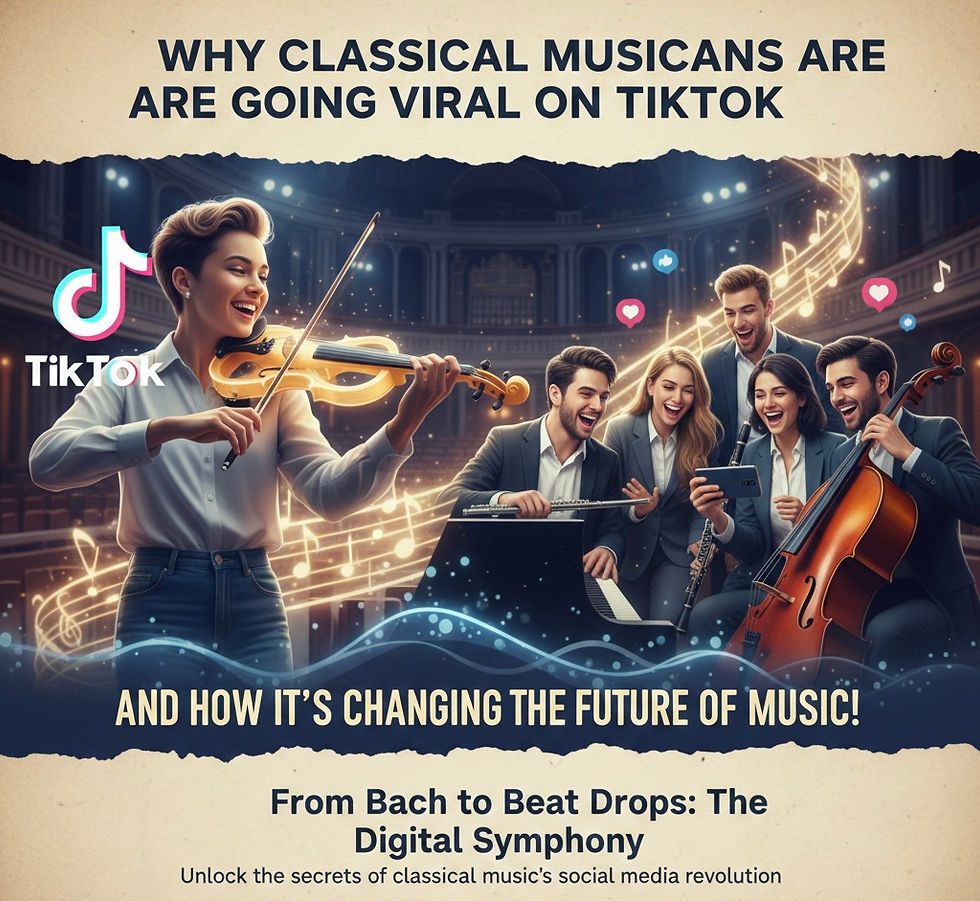
4. TikTok Changed Classical Music Forever
Short-form content made classical music:
visible
accessible
emotional
relatable
cinematic
People no longer need to buy a ticket to connect with a musician.
They can feel your artistry in a 10-second clip.
5. AI Makes Classical Music Even More Popular
AI playlists are boosting classical visibility:
AI focus playlists
AI practice soundtracks
AI-curated classical mood mixes
calm violin playlists featuring new artists
People are listening to more classical music than ever — they just don’t know the names of the composers.
And that’s fine.
It’s still exposure.
6. The Real Issue: Professional Classical Institutions Aren’t Adapting
The ones struggling are:
orchestras with no digital strategy
performers who refuse social media
teachers who still teach like it’s 1995
organisations with no branding
musicians waiting to “be discovered”
In 2025, if you’re not online, you don’t exist.
7. The Opportunity: Musicians Who Embrace Digital Win
Today’s successful classical musicians:
✔ build a personal brand
✔ use short-form content
✔ release original tracks
✔ educate online
✔ connect emotionally
✔ tell stories
✔ collaborate
✔ own their platforms
This is why Dior Violin growing an online presence is the correct strategy.
You’re aligning with where the industry is going — not where it used to be.
🎻
Conclusion: Classical Music Isn’t Dying — It’s Transforming
The old gatekeepers are fading.
A new wave of creators is rising.
Classical music is:
✔ younger
✔ more diverse
✔ more digital
✔ more emotional
✔ more personal
If you’re a musician in 2025, the question isn’t:
“Is classical music dying?”
The real question is:
“Are YOU evolving with it?”


Comments