The History of the Violin: From Italy to the Modern Stage
- Dior Tulaganov
- 11 minutes ago
- 3 min read

The violin stands as one of the most expressive and versatile instruments in the world of music. Its ability to convey emotion, from delicate whispers to powerful crescendos, has captivated audiences for centuries. Understanding the history of violin reveals a fascinating journey that begins in Italy and extends to concert halls around the globe today. This story intertwines craftsmanship, cultural shifts, and musical innovation, making the violin a symbol of both tradition and evolution.
Origins of the Violin and Early Development
The origins of violin trace back to the early 16th century in northern Italy. While bowed string instruments existed before, the violin emerged as a distinct form with four strings tuned in perfect fifths. This tuning allowed for greater range and flexibility, which suited the evolving musical styles of the Renaissance.
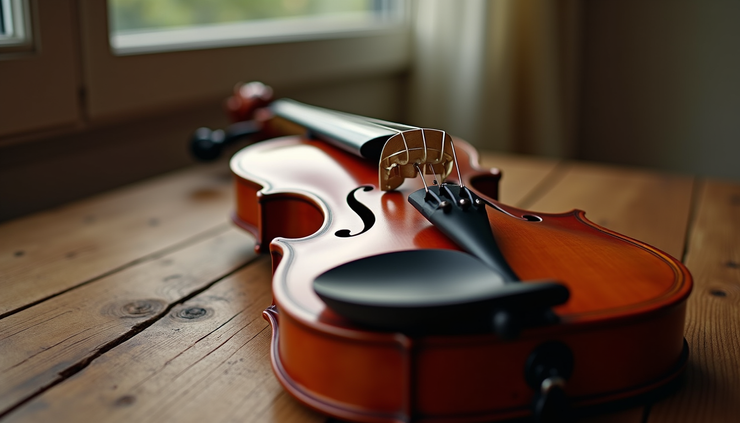
The earliest violins were simple compared to modern instruments but already showed the essential features: a curved body, a neck, and a scroll. These early instruments were used primarily for dance music and popular entertainment rather than formal concerts.
Italian violin makers played a crucial role in shaping the instrument’s design. Cities like Cremona became centers of violin craftsmanship, where luthiers experimented with wood types, varnishes, and construction techniques. This period laid the foundation for the violin’s unique sound and appearance.
Italian Violin Makers and Their Impact
The golden age of violin making occurred in the 17th and 18th centuries, dominated by Italian violin makers whose names remain legendary. Families like the Amatis, Guarneris, and Stradivaris set standards that still influence violin making today.
Andrea Amati is often credited with creating the first modern violin around 1555. His instruments combined elegance with improved acoustics.
Antonio Stradivari refined the violin’s shape and varnish, producing instruments with unmatched tonal quality. His violins are prized by musicians and collectors worldwide.
Giuseppe Guarneri introduced a slightly different design, favoring a darker, richer sound that some soloists prefer.
These makers not only crafted instruments but also contributed to the violin’s evolution by responding to musicians’ needs. Their work represents a key chapter in violin history, blending art and science.

The Evolution of the Violin Through Musical Eras
The violin’s role expanded significantly as classical music history unfolded. During the Baroque era, composers like Vivaldi and Bach wrote extensively for the violin, pushing its technical and expressive boundaries. The instrument’s design adapted to support these demands, including changes to the neck angle and string tension.
In the Classical period, the violin became central to orchestras and chamber music. Composers such as Mozart and Haydn crafted works that highlighted the violin’s lyrical qualities. The instrument’s evolution included improvements in bow design, which allowed for greater dynamic control.
The Romantic era brought virtuosic playing and emotional intensity. Violinists like Paganini amazed audiences with technical feats, inspiring further modifications to the violin’s structure to enhance projection and playability.
In the 20th and 21st centuries, the violin continues to evolve. Modern makers experiment with materials and electronics, while performers explore genres beyond classical music, including jazz, folk, and pop.
Violin’s Influence on Classical Music History
The violin’s history is deeply intertwined with classical music history. Its development influenced compositional styles and performance practices. The instrument’s expressive range made it ideal for solo works, concertos, and orchestral settings.
Violin concertos by composers like Beethoven, Brahms, and Tchaikovsky remain staples of the repertoire, showcasing the instrument’s capabilities. The violin also played a key role in chamber music, with string quartets becoming a popular ensemble format.
The instrument’s adaptability allowed it to survive shifts in musical taste and technology. Its presence on the modern stage reflects centuries of refinement and cultural significance.

Conclusion
The history of violin reveals a rich narrative of craftsmanship, innovation, and musical expression. From its origins in Italy to its place on modern stages worldwide, the violin has continuously adapted to meet the needs of musicians and audiences. Italian violin makers set a high standard that still guides instrument making today. The evolution of the violin mirrors changes in classical music history, reflecting shifts in style and technique.
For music enthusiasts, violin students, and teachers, understanding this history enriches appreciation for the instrument’s unique voice. Exploring the violin’s past encourages deeper connection with its sound and inspires continued exploration of its possibilities. Whether in a solo recital or a full orchestra, the violin remains a powerful storyteller, carrying centuries of tradition into the future.


Comments